Measuring PVC Pipe and Fittings Threads to Identify Size
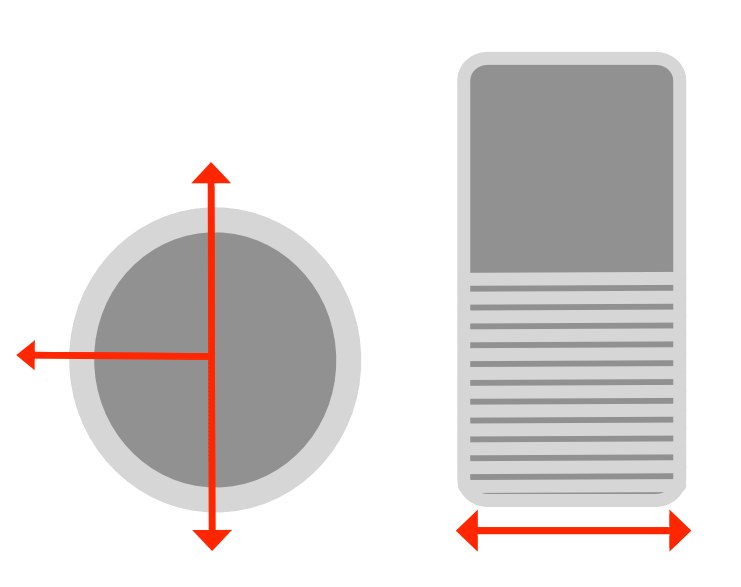
Adding onto an existing irrigation system or needing to replace pipe for fittings comes up very frequently in our business. Normally, it’s a pretty easy task that only requires a fitting or an adapter. The challenge comes when you’re not sure what size of components you have installed. We see this a lot with new homeowners trying to expand an existing system or had a system professionally installed years ago.
One way to determine the size of your existing components is to simply measure the diameter of the components. Pretty much everything in an irrigation system is sized by diameter: from the diameter of the tubing or pipe to the diameter of the threads, almost all of it is sized by its diameter. When there is no printing on the pipe or paperwork noting what size the fittings are, measuring is the advised course of action. However, it comes with a risk that you’ll want to avoid.
Actual Physical Dimensions vs Labeled Nominal Size:
The actual physical size of fittings, tubing, pipe and threads rarely matches the size you want to purchase. The actual physical measurements of an item are typically larger than the listed, nominal size. For example, 1” PVC pipe has an outside diameter over 1-¼, while 1-¼” PVC pipe is over 1.5”.
PVC pipe labeled sizes generally refer to the inside diameter, however; but even that can lead to misleading results as the inside diameter can vary, even in the same labeled size pipe, due to changing wall thicknesses. Also consider that the inside diameter of 3/4” PVC pipe is 0.473”, well over ⅜” and close enough to 0.50” that someone relying only on the physical measurements may assume they have ½” pipe.
Examples of Physical Dimensions:
To illustrate this I have two parts that I am going to size to provide examples. In the first example, I want to add to an existing system using the same pipe I currently have installed whose size I am unsure of. I’ll take the measurements with an inexpensive pair of calipers. A measuring tape can work if you don’t have calipers, it will just be a little more difficult to get a precise reading. A string wrapped around the pipe, marked and measured can also determine its circumference, which can be used to calculate its diameter.
Example 1: PVC Pipe
First, we’re going to size a piece of PVC pipe. When we measure them with the calipers, we get an outside diameter of 0.840”, a bit over ¾ of an inch, and an inside diameter of 0.625, or ⅝” as seen below:
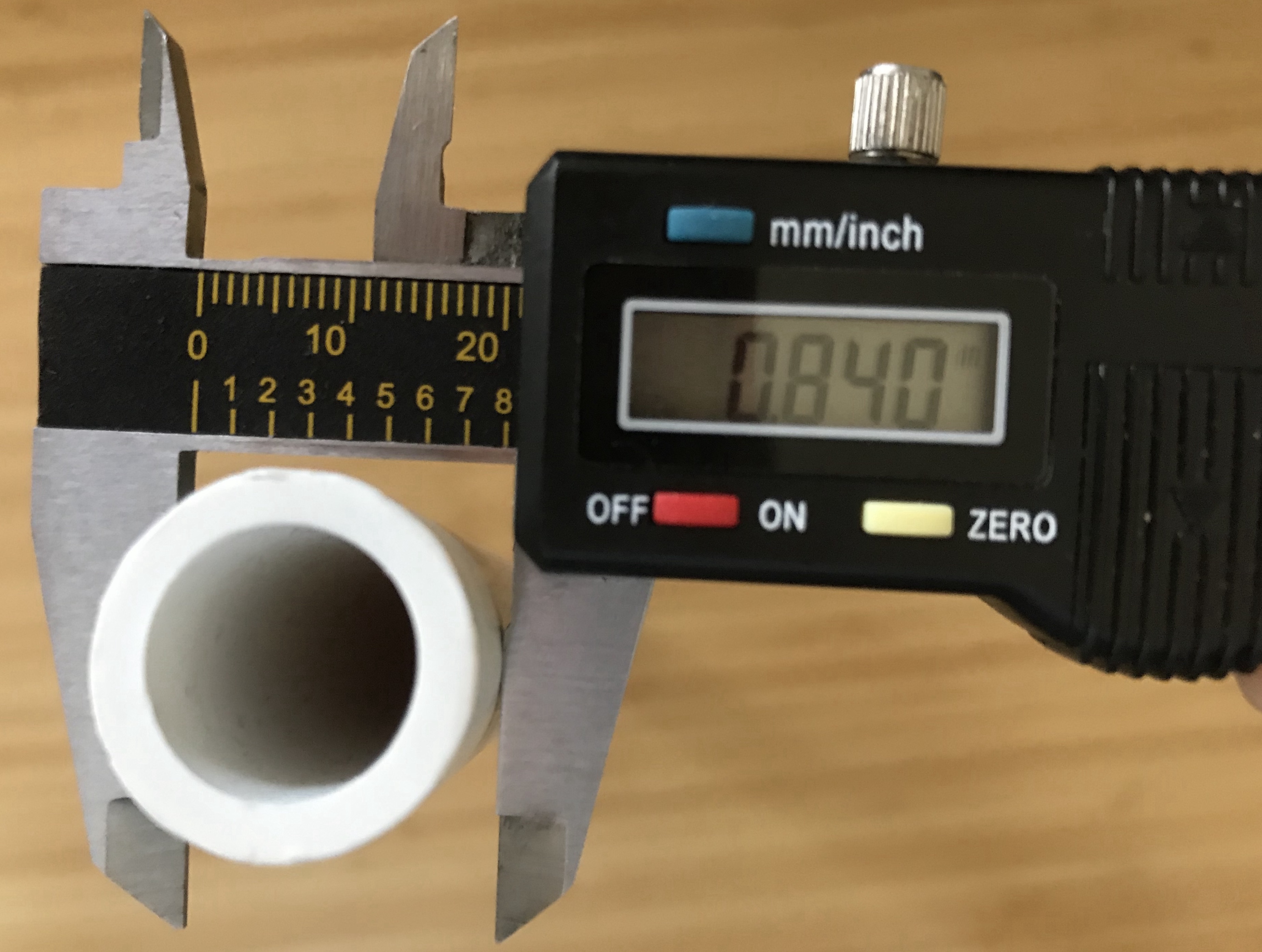
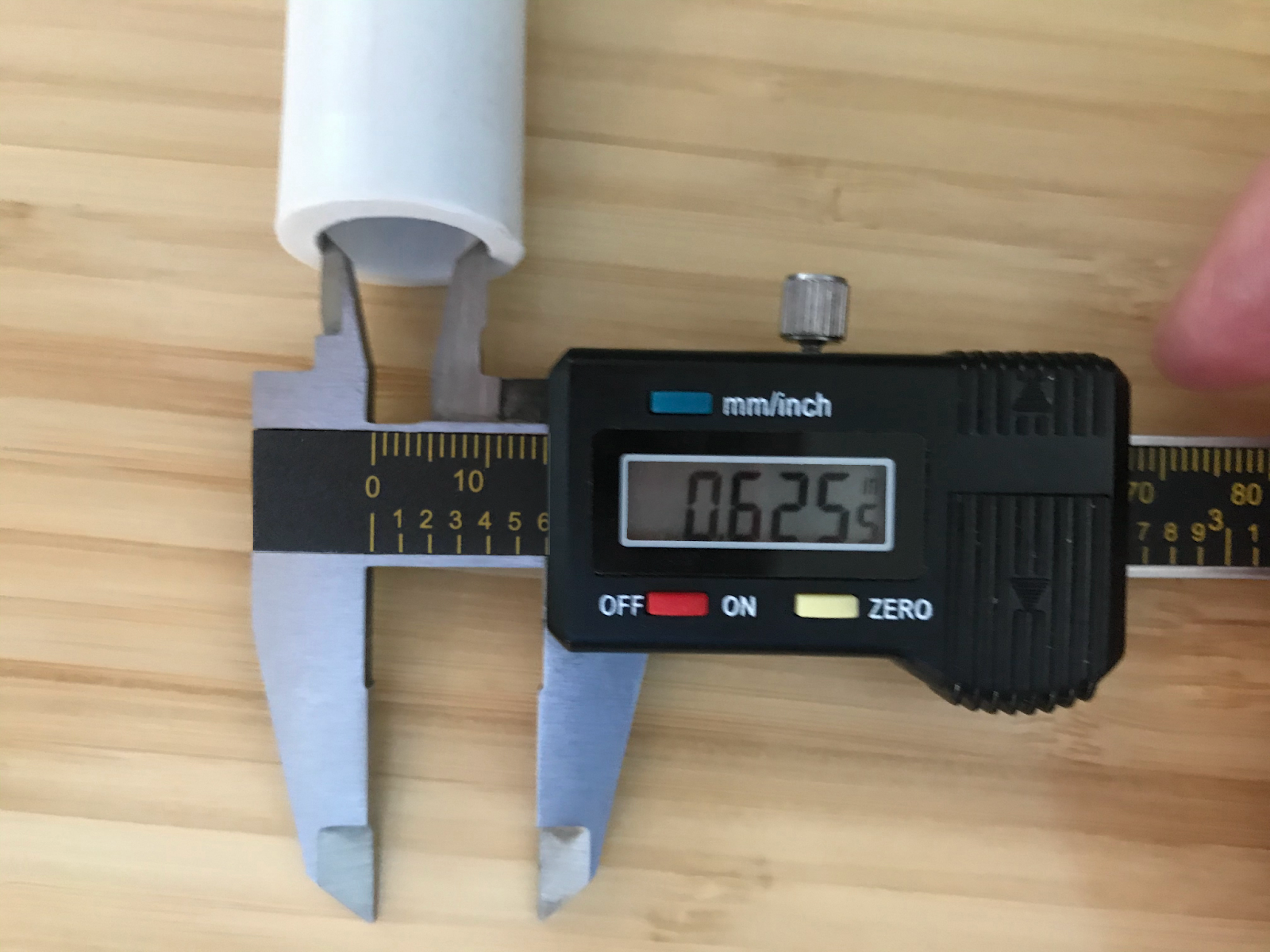
That would seem to indicate our PVC pipe in the photo is ⅝” or ¾” PVC pipe, however you’ll recall above I mentioned that the actual physical dimensions tend to be larger than the labeled nominal size. Since I know this, I can recognize that the pipe is actually ½” Schedule 40 PVC pipe, but had I relied on my physical measurements and bought pipe labeled similarly there’s a very good chance I would have purchased the wrong size.
If you have pre-existing PVC pipe that you’d like to extend, you can use this chart below to show what the actual physical dimensions of various nominally sized pipes are:
Measuring threads is similarly challenging, as the diameter of the threads will rarely match up to the nominally labeled size.
Example 2: Threads on a Hose Bib:
One we see often is someone measuring their hose bib or spigot and purchasing connections based on the physical dimensions.
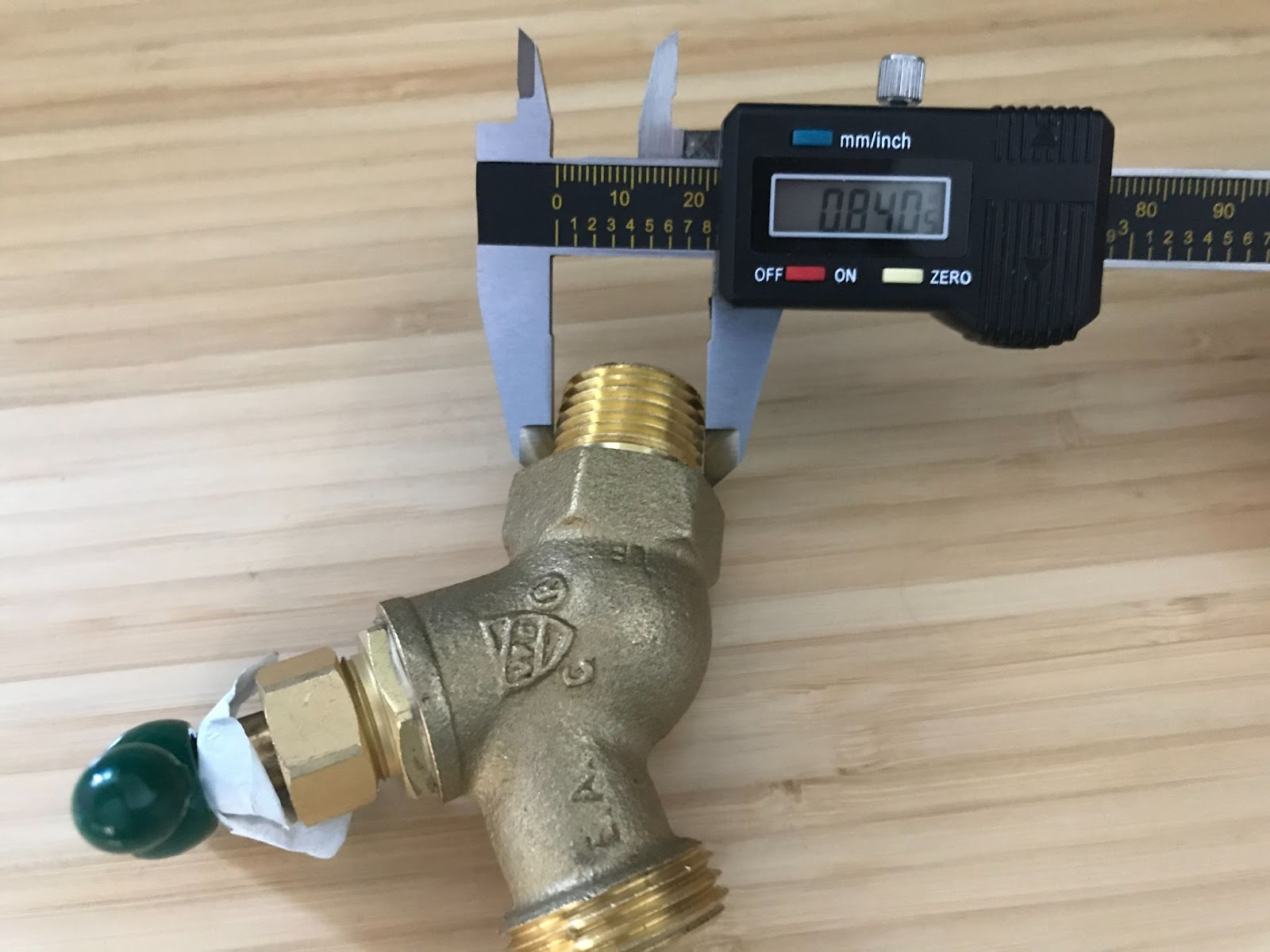
For example, let’s say that someone was looking to replace their hose bib and took the old one out to take measurements at the inlet and outlet to determine what they needed to get to replace it. In this case the inlet and outlet are different sizes, as seen below.
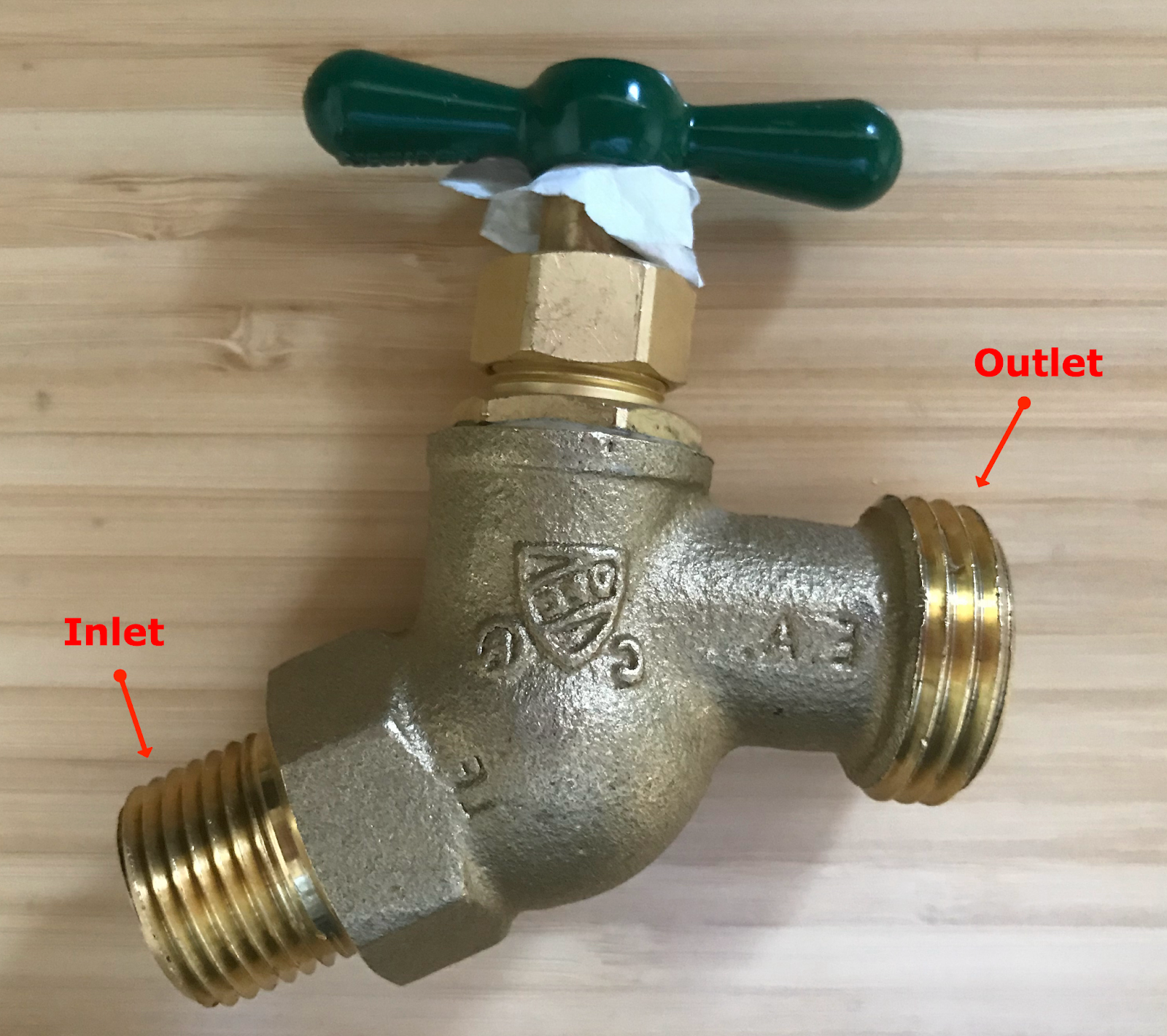
First, they measure the inlet so they can buy the same size at the store to ensure it connects the same as the old one did. The inlet measures 0.840”, comfortably between ¾” and 1”.
The outlet, as seen below, measures over an inch, coming in at 1.065”:
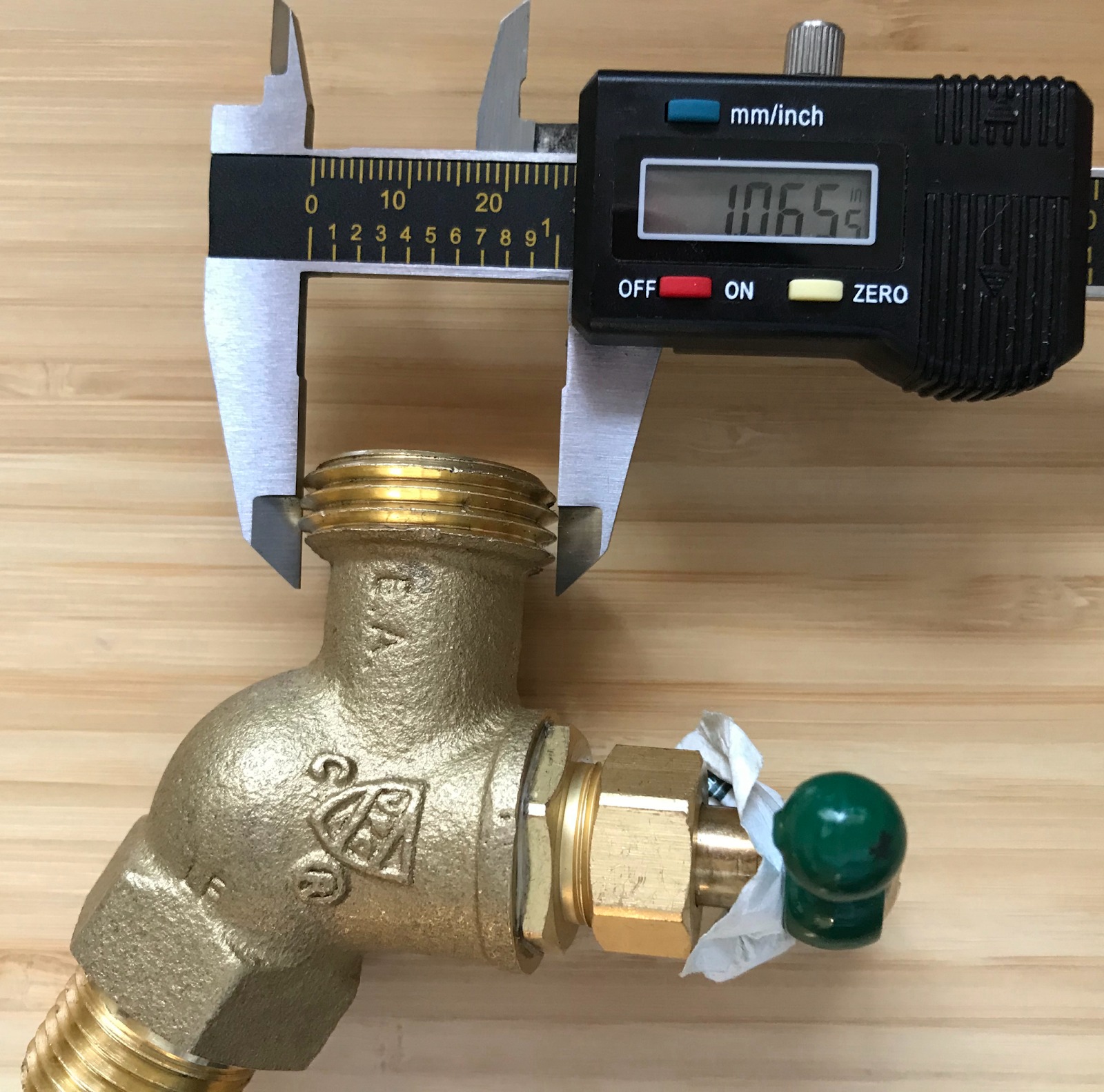
The physical measurements we took, 0.840” at the inlet and 1.065” at the outlet, would make it appear we would need a ¾” x 1” spigot, however, like the pipe illustrated above, this is not actually the case.
This particular part actually has a ½” inlet and a ¾” outlet and would be compatible with parts that are labeled ½” and ¾”.
Nominal labeled size versus actual physical dimensions is definitely not an intuitive thing and causes a lot of confusion that I hope this helps clear up to some degree.
If you do take physical measurements of your parts, reference diameter charts below to locate the nominal size of your pipe or fitting threads based on the physical diameter.
Note: when measuring threads, your physical measurements may not align perfectly with the chart below, particularly when measuring pipe threads. The reason for this is that they taper, so the diameter is not consistent throughout its entire length.
Charts:
Thank you for reading. If you have any questions, comments or feedback, please Contact Us. We read and reply to every message we receive and would love to assist with your questions and learn from your feedback.